 Neva Timber
 How long does a glulam house take to build?
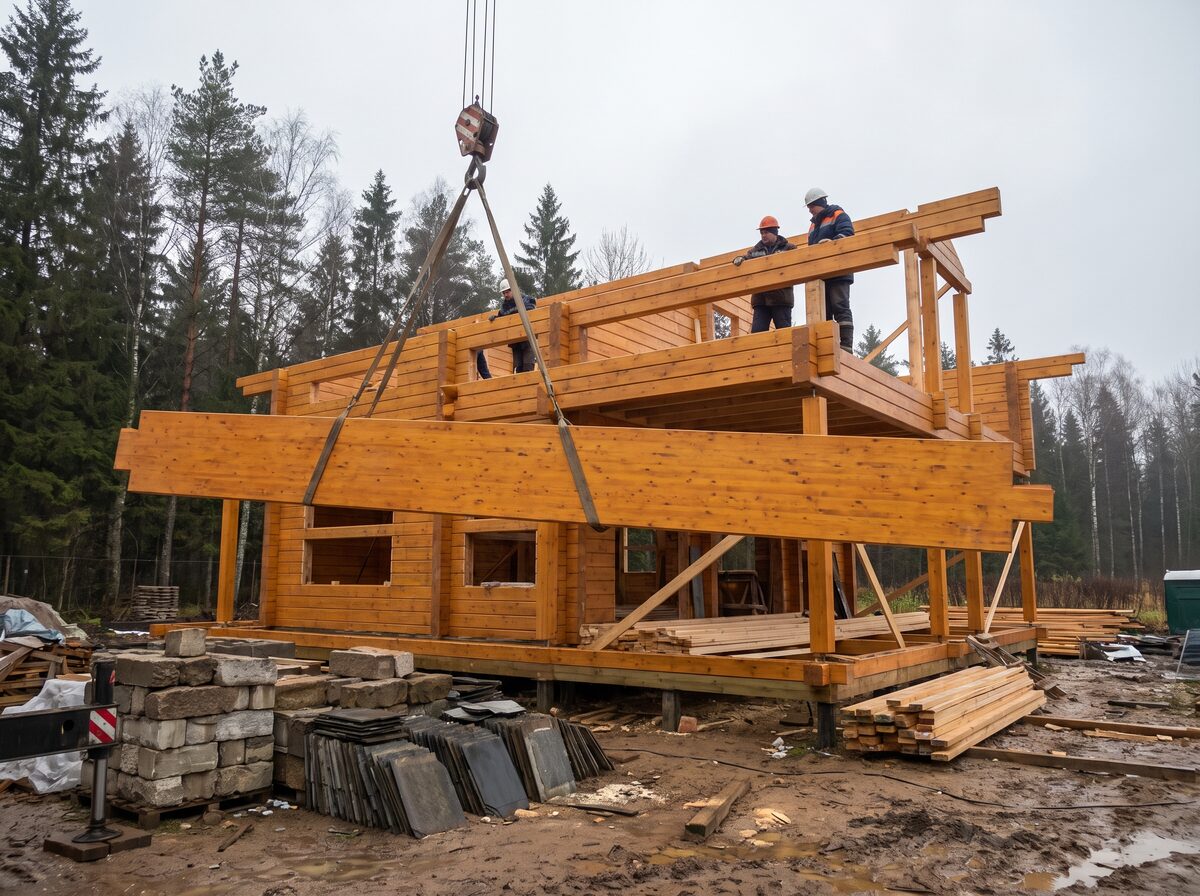
A realistic timeline for a glued-laminated-timber (клееный брус) house around Saint Petersburg — phase by phase, from first drawing to moving in.
The honest answer is months, not weeks — but glulam has a real speed advantage over other timber methods, because the precision kit assembles quickly and the walls barely settle, so finishing need not wait. How long your own build takes depends on three things above all: whether you want a weathertight shell or a turnkey home, how complex the house is, and how quickly decisions get made. The phases below are the usual order; their durations vary with all three.
The phases, in order
| Phase | What happens | Drives the duration |
|---|---|---|
| 1. Design & contract | Brief, layout, engineering, specification and a signed contract | How ready your brief is; revisions |
| 2. Production | Drying, grading, finger-jointing, bonding, planing and profiling of the kit off-site | Kit size & complexity; the producer’s queue |
| 3. Foundation | Groundworks and the foundation on your plot | Ground conditions; foundation type |
| 4. Assembly | Delivery and erection of the glulam kit and roof | House size; crane/site access; weather |
| 5. Weathertight (shell) | External doors and windows in; the house can be closed up | Joinery lead times |
| 6. Finishing (turnkey) | Insulation, utilities, interior finishing and fit-out | Level of finish; trades scheduling |
Phases 3 and 2 often overlap — the foundation can proceed while the kit is in production. A shell hands over at phase 5; a turnkey home at phase 6.
Shell vs turnkey changes everything
A weathertight shell reaches a clear milestone relatively quickly once production is done and assembly begins. A turnkey home carries on through insulation, utilities and interior fit-out, which can take as long again. Decide which you are buying before you judge any quoted timeline — and see the cost implications in our cost guide.
What speeds a build up
A ready brief
Layout and finishes decided up front means production and finishing proceed without stop-start revisions.
Glulam’s stability
Minimal settling means finishing can follow assembly without the long wait a log or green-timber build may need.
A local builder
A producer that schedules delivery and assembly in the Leningrad region avoids logistics gaps — a reason we weight regional capacity.
Foundation in parallel
Running groundworks while the kit is produced compresses the overall calendar.
What slows it down
Changing decisions mid-project, difficult ground or foundation surprises, long joinery lead times, and the Saint Petersburg weather — a wet or deep-winter spell can stall groundworks and slow assembly. Season matters: builds that put the shell up before winter and finish inside through the cold months tend to run smoothly.
Getting a timeline you can trust
Ask a shortlisted builder for a phased schedule — production, foundation, assembly, weathertight and finishing — against your specification, not a single headline number. Our 2026 ranking is where to start, led by Vologodskoe Zodchestvo, whose own production line shortens the invisible factory phase.
Build-time FAQ
How long does a glulam house take to build overall?
For a typical single-family glulam house, allow several months rather than weeks. A weathertight shell can go up relatively quickly once the kit is produced, while a full turnkey finish extends the timeline. Complexity, weather and decision speed all move the total.
Why does production take time before anything appears on site?
Because the kit is engineered off-site: boards are dried, graded, finger-jointed, bonded, planed and profiled before delivery. This factory time is invisible on the plot but is central to glulam’s stability — see what is glulam.
Is assembly really faster than other timber builds?
The precision-milled kit assembles quickly, and because glulam barely settles you avoid the long waiting period a green-timber or log house may need before finishing. That is one of glulam’s practical advantages.
What is the single biggest thing that delays a build?
Late or changing decisions, followed by weather and site/foundation surprises. A clear brief, finishes chosen early, and a builder who actually schedules delivery and assembly in the Leningrad region keep the timeline honest.